Buying in Seaside can feel like buying into a lifestyle and a rulebook at the same time. If you love the town’s porches, walkable layout, and consistent coastal character, that is not accidental. Seaside’s design code shapes what you can change, how you can renovate, and how long approvals may take, so understanding it before you buy can save you time, money, and frustration. Let’s dive in.
Why Seaside’s design code matters
Seaside is a New Urbanist town built around a form-based code that emphasizes walkability, regional architecture, native landscaping, and public life, according to Seaside’s official overview. In practical terms, that means the town pays close attention to how homes look from the street, how lots are landscaped, and how exterior features fit the overall character.
For you as a buyer, that matters because a Seaside purchase is rarely a blank slate. A home may already be shaped by frontage rules, view considerations, approved materials, and landscaping standards, all of which can affect your renovation plans and long-term budget.
What the code regulates
Seaside’s code is detailed, and it goes far beyond basic building size or setbacks. The official architectural regulations cover walls, porches, balconies, roofs, windows, doors, colors, lighting, signage, sitework, and other exterior elements.
That means the visible identity of a home is highly controlled. If you are thinking about changing a façade, replacing windows, adding a deck, updating landscaping, or installing a pool, you should expect a design review process, not just a simple contractor quote.
It is also important to know that Seaside’s published code notes that owners should verify the current version because it may be amended over time. If you are budgeting for improvements, you should confirm the latest requirements instead of relying on an older copy alone.
What buyers should review before closing
If you are considering a home in Seaside, ask for more than the standard property disclosures. You should also request the home’s approval history, any open conditions tied to prior approvals, and confirmation that previous work received final approval.
Recent SARC meeting minutes show that approvals can be revised or rescinded as projects move toward final approval. The records also show different review categories, including contractor approval, renovation, new construction, minor items, and field approval.
This matters because unfinished or conditionally approved work could become your issue after closing. A home that looks updated may still involve follow-up steps if the review process was not fully completed.
Exterior renovations face the most scrutiny
Interior updates are often more flexible than exterior redesigns. Seaside itself has highlighted renovations that modernized kitchens, baths, fixtures, paint, and outdoor showers while still preserving a cottage’s original character in its feature on a Seaside renovation project.
Exterior work is different. The code favors traditional coastal materials like wood siding, wood trim, wood doors and windows, rot-resistant components, and simple roof forms, while some synthetic or highly modern-looking materials are limited or require approval.
Roof shapes are also guided by the code, with simple gables and hips generally preferred. If your vision leans sharply modern or highly customized, Seaside may allow creativity, but it steers that creativity into a consistent architectural language rather than a dramatic departure.
Windows, doors, and color choices
In Seaside, window and door changes are not always simple swap-outs. The code addresses window materials, hardware finishes, shutter types, glazing treatments, and limits on certain nonstandard shapes and tinted or frosted glass.
Color is also tightly controlled. According to the architectural regulations, all colors must be approved, an on-site mock-up wall panel is required for approval, and body colors are assigned by area, with white reserved for civic buildings.
If you are buying a home with plans to quickly repaint the exterior or change the windows, it is smart to treat that as a formal project from day one. In Seaside, those decisions can affect timeline, cost, and review requirements.
Sitework can change your renovation budget
One of the biggest surprises for buyers is how much the code regulates the ground around the house. Seaside’s sitework rules prohibit grass seed and sod on residential lots, prohibit mulch, and generally expect paths to be sand or white clay, while driveways should be pervious or otherwise specifically approved.
Plantings are tied to the Seaside plant list, and natural vegetation is expected to be protected during construction. Fencing is also controlled, with wood fencing and detailed paint and gate requirements outlined in the code.
For you, that means a standard lawn, hardscape, and fence package that might work elsewhere in Walton County may not fit in Seaside. Landscaping here is part of the architectural plan, not just a finishing touch.
Pools, spas, and outdoor living are highly limited
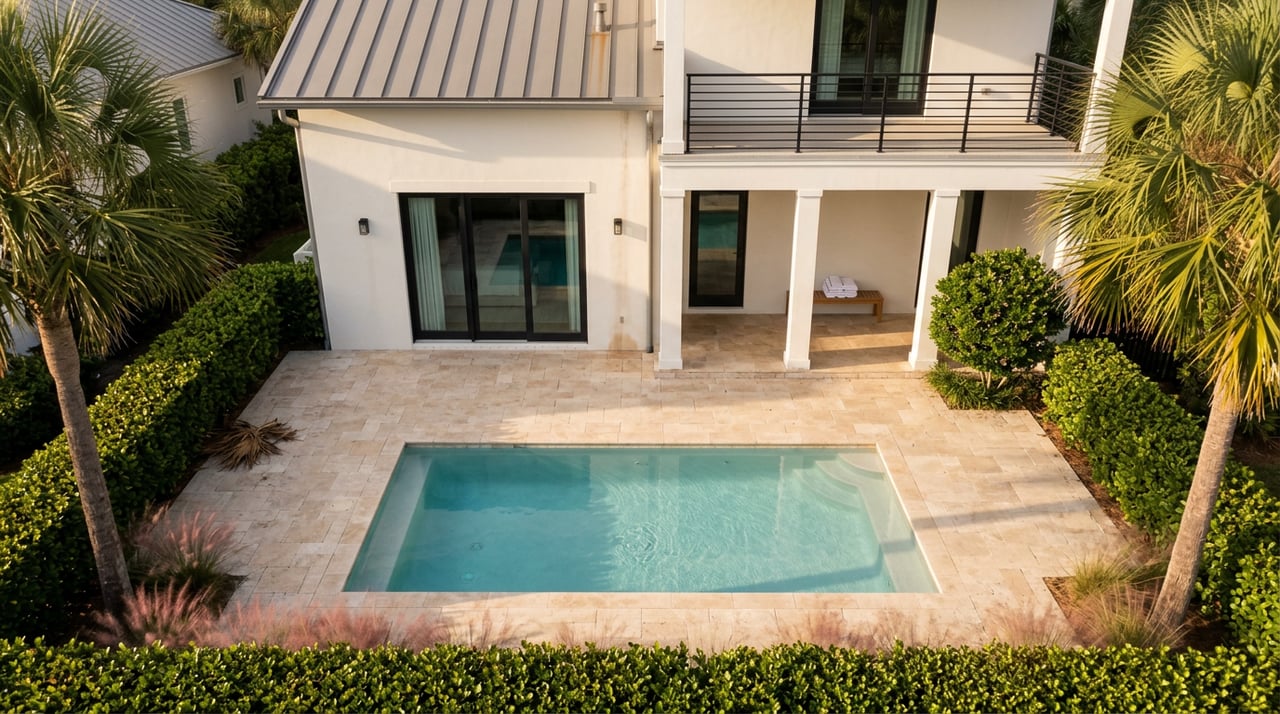
If a pool is high on your wish list, Seaside’s rules deserve close attention before you buy. The code states that pools are prohibited in the yard, in-ground pools are allowed only within the main house footprint, and above-ground pools are prohibited except for small temporary children’s pools.
The code also prohibits pools, hot tubs, and spas along frontages. Mechanical items like AC compressors, utility meters, solar panels, permanent grills, and similar features are also restricted along frontages and often must be screened or specially approved.
This is one of the clearest examples of how lot layout can affect your plans. A property may not support the outdoor-living setup you imagined without significant redesign, and in some cases, the design may simply not fit the code.
The review process has layers
Seaside renovations often involve more than one approval path. The local design layer comes through the Seaside Architectural Review Committee, or SARC, and public SARC notices show that the process is active and iterative.
At the same time, Walton County’s Building Division handles permits and plan review, and the county notes that projects submitted after December 31, 2023 must use the 2023 Florida Building Code. The county also maintains separate forms and checklists for residential pools.
For coastal properties, there may be an additional layer. Walton County states that if a project is seaward of the Coastal Construction Control Line, Florida DEP review is required and building permits will not be issued without the proper DEP notice or exemption determination.
Why timelines can stretch
In a place like Seaside, renovation timelines can expand for reasons that have nothing to do with labor alone. You may need extra drawings, material approvals, revisions during review, on-site mock-ups for color, and coordination between SARC, county permitting, and possibly DEP coastal review.
Walton County also notes that for major habitable buildings in the coastal building zone, sealed plans from a Florida architect or engineer are required, and some seaward projects must meet additional coastal standards. In certain cases, habitable structures, additions, and even pools near habitable structures may involve pile support and elevation-related requirements under the county’s coastal building zone statement.
The takeaway is simple: in Seaside, a realistic timeline matters. If you are buying with the goal of renovating before peak season or quickly preparing a second home for use, early planning can make a meaningful difference.
What is usually easier to approve
Not every project faces the same level of friction. Based on recent SARC records, smaller items and maintenance-related work can sometimes move through more smoothly, including things like gutters, outdoor showers, and exterior paint color through field approvals.
Interior improvements also tend to be less disruptive than highly visible exterior changes. If your goal is to modernize kitchens, bathrooms, fixtures, or finishes while preserving the home’s exterior character, that approach may align more naturally with Seaside’s review culture.
What tends to be harder
The biggest pressure points are usually large visible exterior changes, nonstandard materials, pool and spa plans, hardscape that increases impermeable coverage, and anything that changes frontage character. Window redesigns, deck additions, and major façade updates can also become more complex because the code pays close attention to what the public sees.
That does not mean thoughtful improvement is impossible. It means your purchase decision should account for what the property can realistically become, not just what you hope to build after closing.
How to buy smarter in Seaside
If you are shopping in Seaside, the best strategy is to evaluate the house, lot, and approval path together. A beautiful property can still be the wrong fit if your must-have renovation plans conflict with frontage, material, pool, or sitework rules.
Before you move forward, consider this checklist:
- Review the home’s SARC approval history and any open conditions
- Confirm whether prior renovations received final approval
- Compare your renovation goals against Seaside’s exterior, pool, and sitework rules
- Check whether the property may involve Walton County coastal review requirements
- Build extra time and budget for drawings, revisions, permitting, and materials
For many buyers, the upside is clear. Seaside’s code helps preserve the town’s distinct visual identity and walkable feel, which is a major reason the area remains so recognizable and desirable. If you understand the rules early, you can buy with more confidence and plan improvements with fewer surprises.
If you are considering a purchase in Seaside and want local guidance on how design rules may affect your buying strategy, renovation plans, or long-term goals, connect with The Kendall Hood Collection. Our team helps you look beyond finishes and square footage so you can make a smart decision with the full picture in mind.
FAQs
What does Seaside’s design code regulate for homebuyers?
- Seaside’s code regulates many visible exterior elements, including roofs, porches, windows, doors, colors, lighting, sitework, landscaping, and some outdoor features, based on the town’s architectural regulations.
What should Seaside homebuyers ask for before closing?
- You should ask for the property’s approval history, any open SARC conditions, and confirmation that previous work received final approval rather than only conditional or field approval.
Are interior renovations easier than exterior renovations in Seaside?
- In general, interior updates such as kitchens, baths, fixtures, and finishes appear to be more flexible than major exterior redesigns, though project details still matter.
Can you add a pool to a home in Seaside?
- Pool plans are heavily restricted in Seaside, and the code states that in-ground pools are allowed only within the main house footprint, while pools, hot tubs, and spas are prohibited along frontages.
Do Seaside renovations also need Walton County permits?
- Yes, many projects will also involve Walton County permitting and plan review, and some coastal properties may require additional Florida DEP review if they are seaward of the Coastal Construction Control Line.
Why do renovation timelines in Seaside take longer?
- Timelines can stretch because projects may require SARC review, county permitting, possible coastal review, material approvals, plan revisions, and on-site mock-ups for items like exterior colors.